
2026/06/12 11:19
Photo Gallery International, Toranomon-Minato ku, Tokyo
Throughout my life of about 60 years, I have been fortunate enough to see many wonderful photographic works. Many of these were when I was in my twenties. At first, they struck me with surprise and a quiet shock, and I feel that it was much later that I was able to understand them and make them my own. I'd like to share a little about the memories of that wonderful photographic work that moved me so deeply, and what happened at the time.
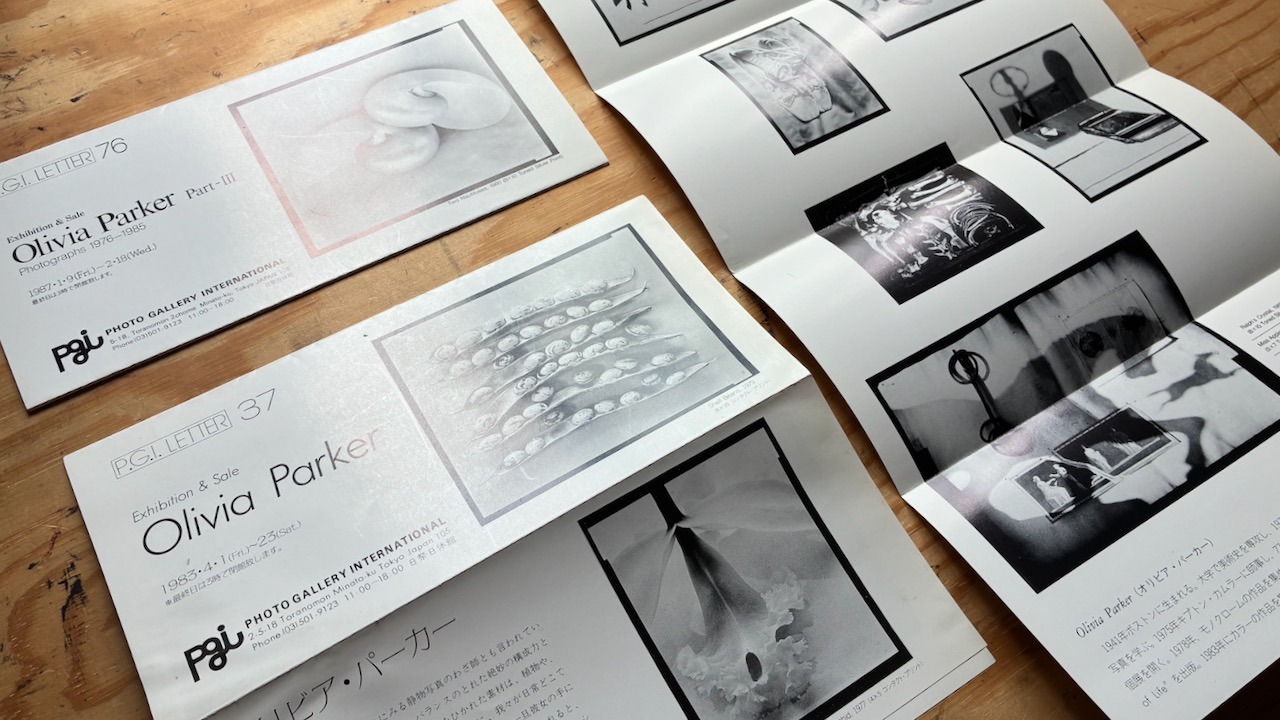
The first installment: Tokyo in the 1980s. Olivia Parker's exhibition, Toranomon, Tokyo, "Photo Gallery International"
In the mid-1980s, I was a college student living in Nakano, Tokyo. At that time, the Japanese economy was progressing at a furious pace, and new buildings were being constructed one after another throughout the city. However, I was a young person who was more drawn to the lingering traces of the Edo period (the name Tokyo had 200 years ago). Around that time, I first learned about PGI, a gallery specializing in photography. For me, having studied photography at college, being able to see original Ansel Adams photographs was a wonderful experience. PGI's founder was a trading company specializing in advanced medical equipment, and the company was also a pioneer in art, being the first to introduce American fine prints to Japan. At the time, it was located in a quiet office district near the government office area. Just taking the oldest subway in Japan, climbing the stairs, and stepping into that area made me a little nervous. It turned out to be a surprisingly small two-story building. Gathering my courage, I opened the door, and a calm, white space unfolded before me, with neatly book-matted photographic works on display. I slowly approached the works, holding my breath, and intently examined each one.
This gallery is where I first saw works by Ansel Adams, Edward Weston, Wynn Baroque, and many other masterpieces. What was particularly wonderful about this gallery was how each work was enhanced by incredibly meticulous book mats and frames. I believe that PGI's policy of enhancing the value of photographic art while also aiming for archival (long-term protection and preservation) has taught me a valuable lesson. While color photographs produced using the C41 process were dominating the market at the time, I was more captivated by the work of Black & White. The listed prices were far beyond my reach, so I enjoyed occasionally purchasing small photobooks and the small leaflets that PGI produced each time for 500 yen (about 3.5 dollars). After carefully and thoroughly examining each artwork displayed on the two floors, I was completely exhausted. On my way home, I unfolded the leaflet I had seen earlier and sipped an espresso at a cafe next to the subway entrance—a truly blissful moment.
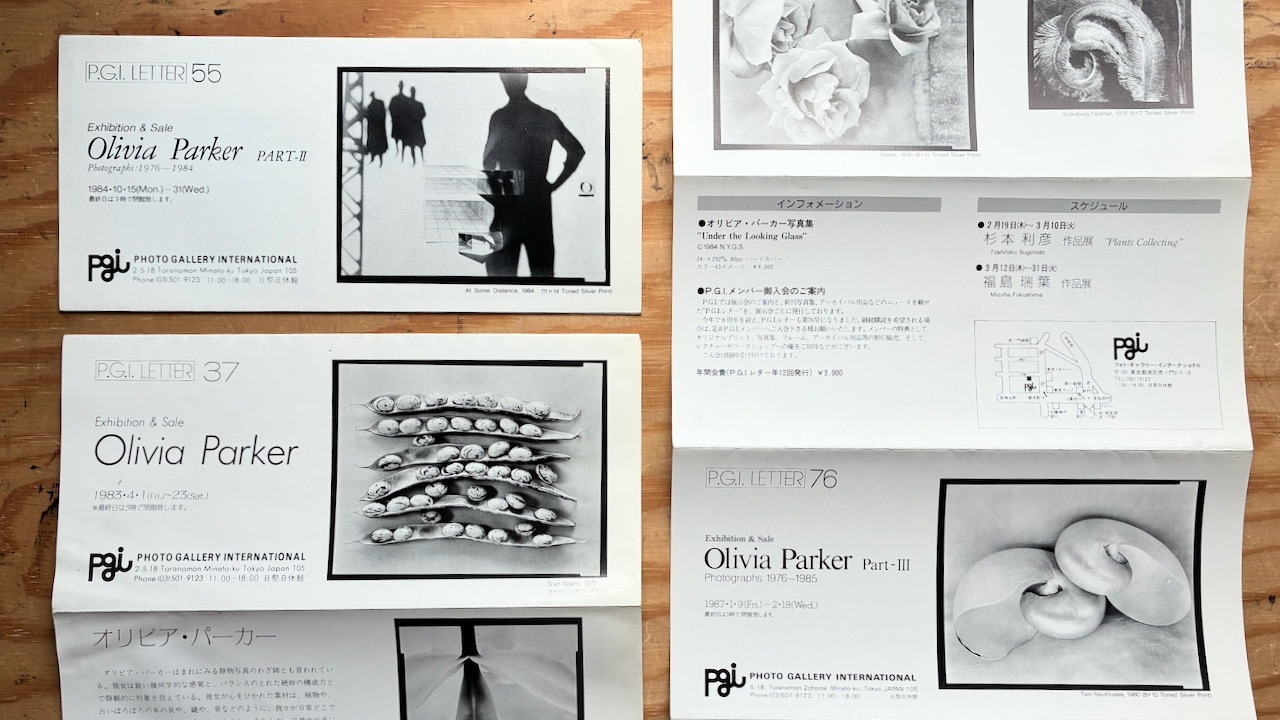
The exhibition repeatedly featured not only works by famous photographers, but also by other artists who produced wonderful pieces. Among them, I was particularly captivated by the still-life photographs of Olivia Parker. Her still-life photographs, meticulously shot with 4x5, 5x7, and sometimes even large 8x10 equipment, possessed a truly mysterious charm. They didn't simply showcase her carefully collected items; each one seemed to evoke a world and a story. I felt they weren't just commercial photographs, but a reflection of her very worldview. While I was deeply impressed, I hadn't yet decided on my own direction at the time. Sometimes I was pursuing a "moving, feeling perspective" like Lee Friedlander, and other times I was exploring techniques that involved capturing buildings and landscapes without emotion. Nevertheless, I think I was quietly moved by the style of giving life to still-life motifs and weaving stories. Looking back, I believe that became the foundation of my current photographic style. I gazed in rapture at the artwork, with its slightly high-key tones and subtly toned, pale hues.
https://www.pgi.ac/en/
https://www.oliviaparker.com/
This two-story gallery was forced to relocate in the late 1990s as part of a regional urban redevelopment project, and a large road was constructed in its place. After relocating to the coastal area, it is now operating as a gallery and photography supplies store in the Azabu district. Until about five years ago, I bought the chemicals for platinum printing there, and even now I still buy cardboard and storage materials from that same place. Nevertheless, when I occasionally look at leaflets created in the 1980s in the boxes where I keep my materials, I am reminded of events that took place in that small two-story gallery in Toranomon.